
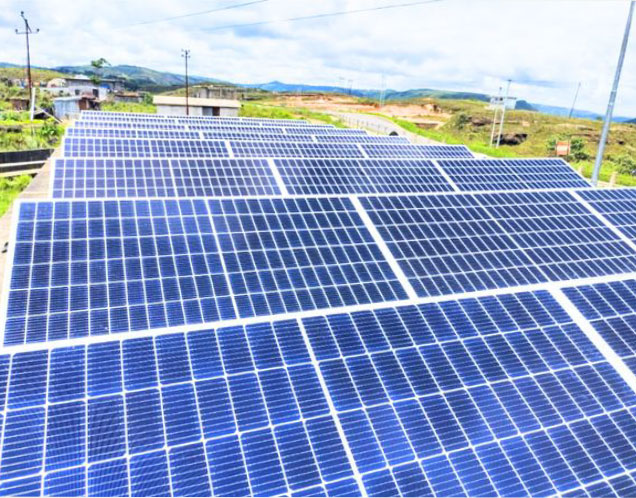
Challenge
- Many rural communities in Meghalaya lack reliable electricity, limiting development and daily life.
- Dependence on centralized power grids, which are often unstable or costly, especially in remote areas.
- Need for an inclusive, decentralized, and sustainable energy model that empowers local communities.
SVM Solution
- In partnership with Hygge Energy, SVM deploys a peer-to-peer (P2P) renewable energy sharing system, enabling villagers to generate, share, and trade clean energy locally.
- This model uses localized solar microgrids, where surplus electricity from one community source (e.g., a learning center) is distributed to nearby users like schools.
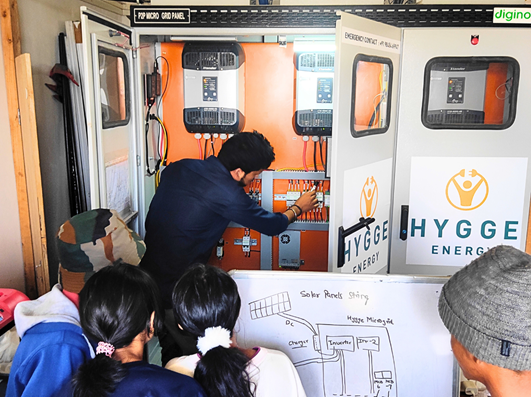
- Includes a digital monitoring system (leveraging Hygge’s platform) that tracks energy production, consumption, and peer-to-peer trades.
Partners
Energizing Transformation
- Renewable Energy Providers: Collaborating with experts in renewable energy like HYGGE ENERGY to establish and integrate sustainable power sources.
- Local Community Leaders: Engaging community leaders to foster participation and ensure the success of the energy-sharing model.
Project Details
Empowering Communities with Sustainable Energy
Localized Renewable Generation
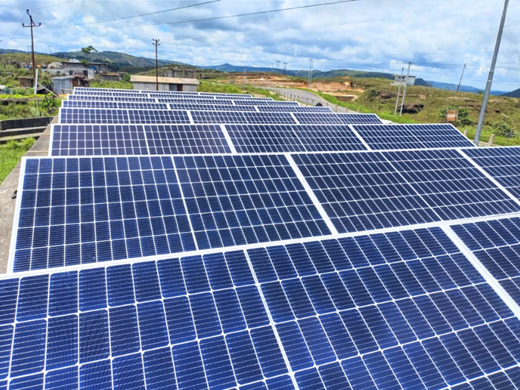
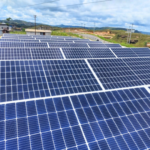
Deployment of solar panels and microgrid infrastructure to produce clean, reliable energy within the community.
Community-Driven Distribution
A peer-to-peer sharing mechanism allows excess energy to be shared or traded among community members (households, schools), reducing waste and maximizing usage.
Resilient & Decentralized Network
Since energy is generated locally, communities are less dependent on potentially unstable or distant centralized grids.
Digital Monitoring and Trading Platform
Use of Hygge’s digital system to monitor energy production/consumption, facilitate energy trades, and ensure fair distribution.
Sustainability & Low Carbon Footprint
Zero carbon emissions from the microgrid, contributing to environmental sustainability.
IMPACT
- 12 kW Solar Micro-Grid: The project has established a 12 kW solar microgrid at the Smart Village Community Learning Centre in Sohrarim.
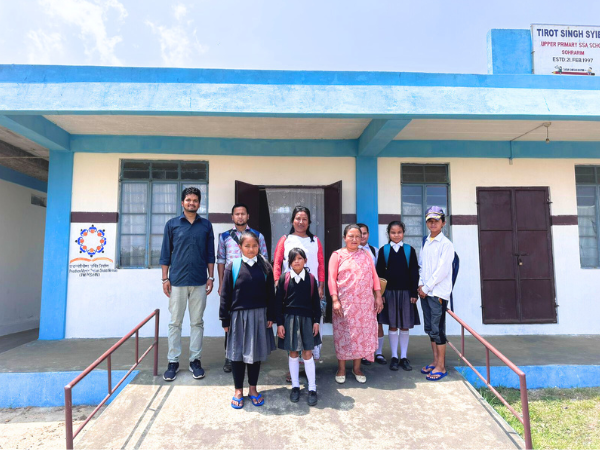
- Peer-to-Peer Energy Sharing: Excess energy from the learning centre is shared with a nearby school via a patented P2P trading mechanism.
- Energy Distribution: 60% of the energy produced is surplus, and one-third of that surplus (~20% of generation) was routed to Tirot Singh Syiem School (~0.5 km away).
- Annual Savings for School: The school saves approximately ₹1,35,000 (~INR 135,000) annually through this shared solar energy model.
- Reliability Under Extreme Conditions: Hygge’s microgrid system provided continuous power even during two weeks of nonstop rain, a significant achievement in a region like Sohrarim that receives very heavy rainfall.
- Zero Carbon Emissions: The system supports clean energy goals with zero carbon emissions during operation.
Join Apollo Meghalaya Digital Dispensary Project
Lorem ipsum dolor sit amet, consectetur adipiscing elit. Mauris elementum egestas nisi, sit amet condimentum arcu pellentesque ac. Maecenas faucibus, ipsum et volutpat egestas, justo massa auctor orci, ullamcorper imperdiet mi nibh ut urna. Nulla facilisi. Nulla vel diam lacus. Morbi laoreet leo a nunc sollicitudin, sit amet